Colorado's Plains
The Great Plains once was a unique grassland prairie ecosystem that extended from northern Canada to southern Texas and east from the Rocky Mountains.
Much of the eastern half of Colorado is part of the Great Plains, once a unique grassland prairie ecosystem that extended from northern Canada to southern Texas and east from the Rocky Mountains. Prior to settlement, wildfires played a frequent and important role in preserving these ecosystems. Agriculture and development altered this ecosystem and shaped it into today's plains.
Forests on the Colorado plains include riparian forests along the major river corridors, agroforestry plantings for windbreaks and shelterbelts on agricultural lands, plantings for various wildlife and recreational areas, and community forests in cities and towns. Except for the naturally occurring riparian forests, most of the trees on the plains have been planted to modify the harsh, windy environment and make it more suitable for humans, animals and crop production. The Colorado State Forest Service Nursery has been a reliable and important source of tree and shrub seedlings for these conservation plantings.
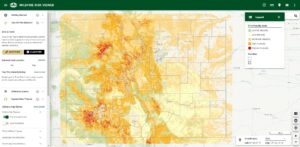
As Colorado's population continues to grow, significant and rapid construction expands into once "wild" prairie and forested landscapes. The increasing number of homes and traffic in these areas brings a heightened risk of accidental fire starts and escapes. Grasses are dry during much of the year; they ignite quickly and fire spreads rapidly. Having your home or property on or adjacent to these abundant dry fuels puts you and your property at risk. Residents need to know what measures to take to help reduce wildfire risks.
- Planting Trees for Conservation
- Selecting, Planting & Caring For Trees
- Agroforestry
- Wildfire Risks on the Plains
- Urban & Community Forestry
- Colorado Land Use & Ownership Patterns